
Takashi Murakami is a prolific Japanese artist who has worked across a wide range of media, from the traditional nihonga style and fine art painting, to experimentation in digital and commercial realms. Embracing high and low art forms, pop culture and mass media, Takashi coined the term Superflat to describe contemporary smooth-surfaced Japanese art, graphics and animation. Feast your eyes on some of the best examples of Superflat artwork below.
1. City Glow [Chiho Aoshima, 2005]

Image: Asianart.com
Aoshima creates exotic worlds populated by demons, ghosts and schoolgirls. Her fantastic cityscapes and scenes of nature are computer-generated; the images can then be printed on a wide range of surfaces, from handbags and clothing, to canvases and vast wallpaper installations. Aoshima’s work has decorated sites such as London’s Gloucester Road tube station and 14th Street–Union Square subway station in New York.
2. Strawberry Fields [Chiho Aoshima, 2003]

Image: Fill in the Blank Gallery
Kaikai Kiki Co is an art collective founded by Murakami in 2001. The aim of the collective is to promote and support selected artists. Artist Chiho Aoshima joined the collective with no formal art training, but she has since established an international reputation for her dream-like imagery.
3. Nomads are Excellent in Battle [Aya Takano, 2007]

Image: Superflat Art
Having earned a reputation with her drawings and paintings, Takano has also created a series of comic books and videos that feature her bizarre visions of the future.
4. Dimension Bomb (film still) [Koji Morimoto, 2007]

Image: KojimoriMoto.net
Dimension Bomb, directed by Morimoto, is a visually stunning anime film that follows the tale of an eccentric girl summoning a boy from another dimension, and the explosive repercussions this leads to.
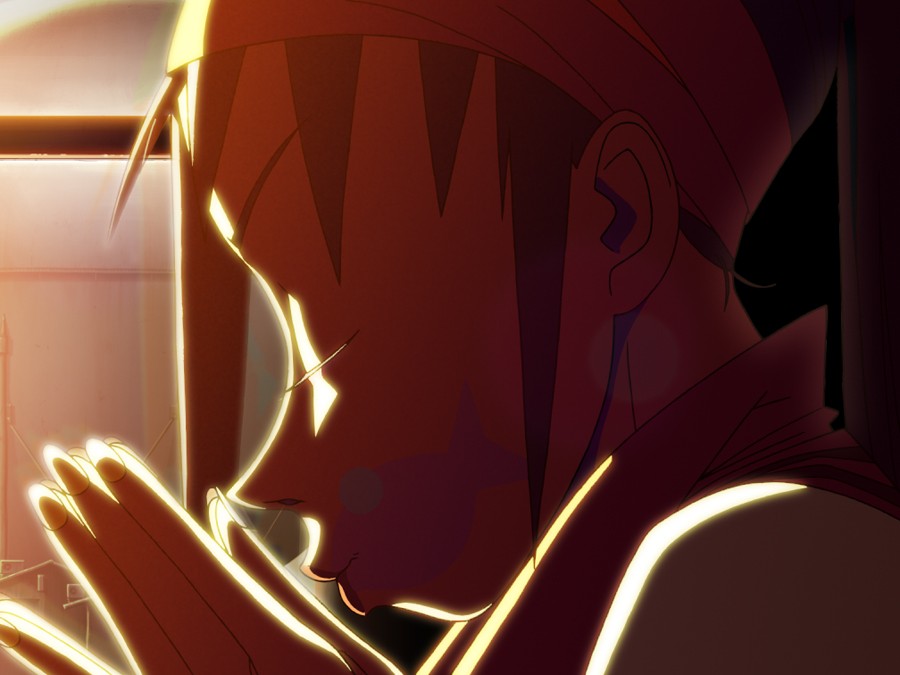
5. Furusato [Sayaka, 2009]

Image: chu.jp
Sayaka is a Superflat artist who combines traditional Japanese painting techniques and compositions with modern cultural references, in a neo-nihonga style. This fusion of old and new in the pursuit of image-making is at the heart of Superflat, the quintessentially Japanese pop art movement.
6. And Then, And Then And Then And Then And Then (Blue) [Takashi Murakami, 1996]

Image: Kaikai Kiki Co.
In his work, Murakami sublimates anime, manga characters and pop culture references into large-scale flat paintings.
7. 727 [Takashi Murakami, 1996]

Image: Kaikai Kiki Co.
Murakami started out studying nihonga. The paintings of this genre adhere to a framework of conventions and techniques, originating in the 19th Century Meiji Period. The artist eventually became disillusioned with this type of art, and developed a passion for the contemporary pop culture that reflects modern-day life in Japan.
8. Tan Tan Bo Puking - a.k.a. Gero Tan [Takashi Murakami, 2002]

Image: Kaikai Kiki Co.
‘Otaku’ is a Japanese concept that refers to people who obsess over specific pursuits, particularly anime, manga and computer games. Murakami has embraced the aesthetic of this culture, but also reappropriates imagery from traditional Japanese art forms.
9. I open wide my eyes but see no scenery. I fix my gaze upon my heart [Takashi Murakami, 2007]

Image: Kaikai Kiki Co.
Superflat, a self-proclaimed post-modernist pop art movement, encompasses a wide range of artists and practitioners who share a particular aesthetic. In 2001, Murakami curated an exhibition entitled ‘Superflat’ that toured West Hollywood, Minneapolis and Seattle, successfully promoting the art phenomenon to a Western audience.
10. White Kitty [Yoshitomo Nara, 2006]

Image: contemporaryartseminar
Tokyo-based pop artist Yoshitomo Nara creates deceptively simple images, often of pastel-hued children against plain backgrounds. While the images at first appear rather innocuous, these children often have aggressive, accusatory expressions, and brandish small weapons such as knives and saws.
11. Little Star Dweller [Yoshitomo Nara, 2006]

Image: contemporaryartseminar
Nara takes inspiration from post-war Japanese and Western culture including comic books and cartoons, but infuses his work with subtle horror and fantasy imagery, along with a punk rock sensibility.
12. Guitar Girl [Yoshitomo Nara, 2003]

Image: Tokyo Art Gallery
13. Looking To The Earth From Moon [Aya Takano, 2006]

Image: Superflat Art
The worlds in which pop artist Aya Takano places her semi-nude heroines are heavily inspired by manga imagery and American science fiction. Elongated characters and all manner of animals drift dreamily through urban scenes, cloudscapes and deep space.
14. Tekkon Kinkreet (film still) [Michael Arias, 2006]

Image: Adobe
Alongside paintings, prints and drawings, Superflat exhibitions have also encompassed anime films such as the work of director Koji Morimoto and other artists from Studio 4°C, of which he is a founder. Above is a film still from Tekkon Kinkreet, directed by Michael Arias and animated by the studio. The film tells the story of two orphaned street kids and their adventures in fictional Treasure Town.
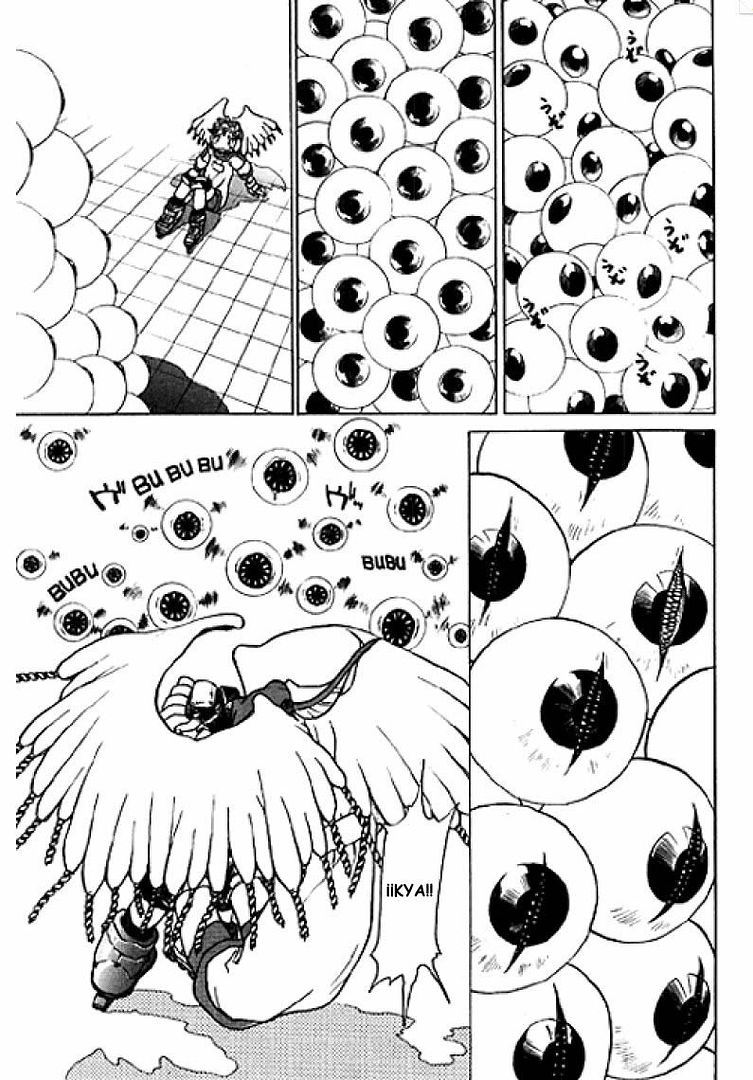
15. Alien 9: Book One [Hitoshi Tomizawa, 2003]

Image: Damn_72
The work of manga artist Hitoshi Tomizawa, with his unnaturally wide-eyed children, reptiles and insects is recognized as part of the Superflat movement. Tomizawa is best known for science fiction stories such as Alien 9 and Milk Closet.